Workshop Journal · Chapter 17
The board nobody drew
Rev A goes from a sentence to a set of fab files, the first acrylic plate says its rows are too tight to play, the second one finally lets a whole hand in, and the aluminium one arrives with gummy bears, the boards right behind it
3 Oct 2026
Rev A is a file now, and a quote says what it costs
Since the coupon answered, the real board has gone from a sentence to a set of fab files. Rev A is one 300.8 × 110 mm, four-layer board: seventy pots, eighteen jacks, four keys and nineteen LEDs on the front, the Patch Submodule plugged into the back. Nobody drew it. A script writes the schematic, another places the parts, our own router laid 187 nets in under four minutes, and the order package comes out in eight seconds. The acrylic plate and one set of panel parts were ordered on 2 Oct; the board waits for the grip test.
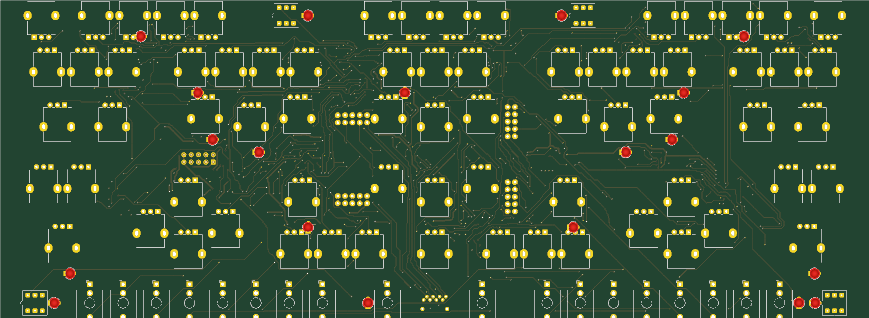
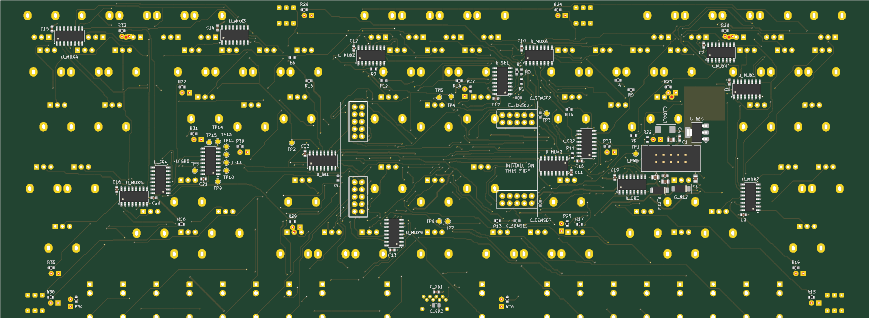
The firmware moved first. Today the coupon ran Rev A's scan code and passed three of four checks: pots reach both stops, five key presses count five, an LED lights while the key is held. The fourth wants two jumper wires I did not have, so it moves to bring-up. Then JLC's placement preview, from a quote, no order placed, showed that the first placement file would have turned all sixteen logic chips 90° across their pads, and both diodes backwards. Fixed, and checked in the same preview, before any money moves.
Money so far, roughly: Thonk £179 for one set of panel parts, import VAT still to come; the plate 28 €; and JLC quotes $78.25 for five assembled boards ($45.40 bare, $32.85 assembly), shipping about $27–33 on top. Ca. £179 + 28 € + $105–111, which at early-October rates (1 £ ≈ 1.17 €, 1 $ ≈ 0.87 €) comes to roughly 330 € so far, before the import VAT on the Thonk parcel.
7 Oct 2026
I blew it
The acrylic plate and the Thonk parcel came today. Pots, knobs, jacks and washers in little bags all over the desk, and the plate drops into the case as planned. Then I put the knobs on.
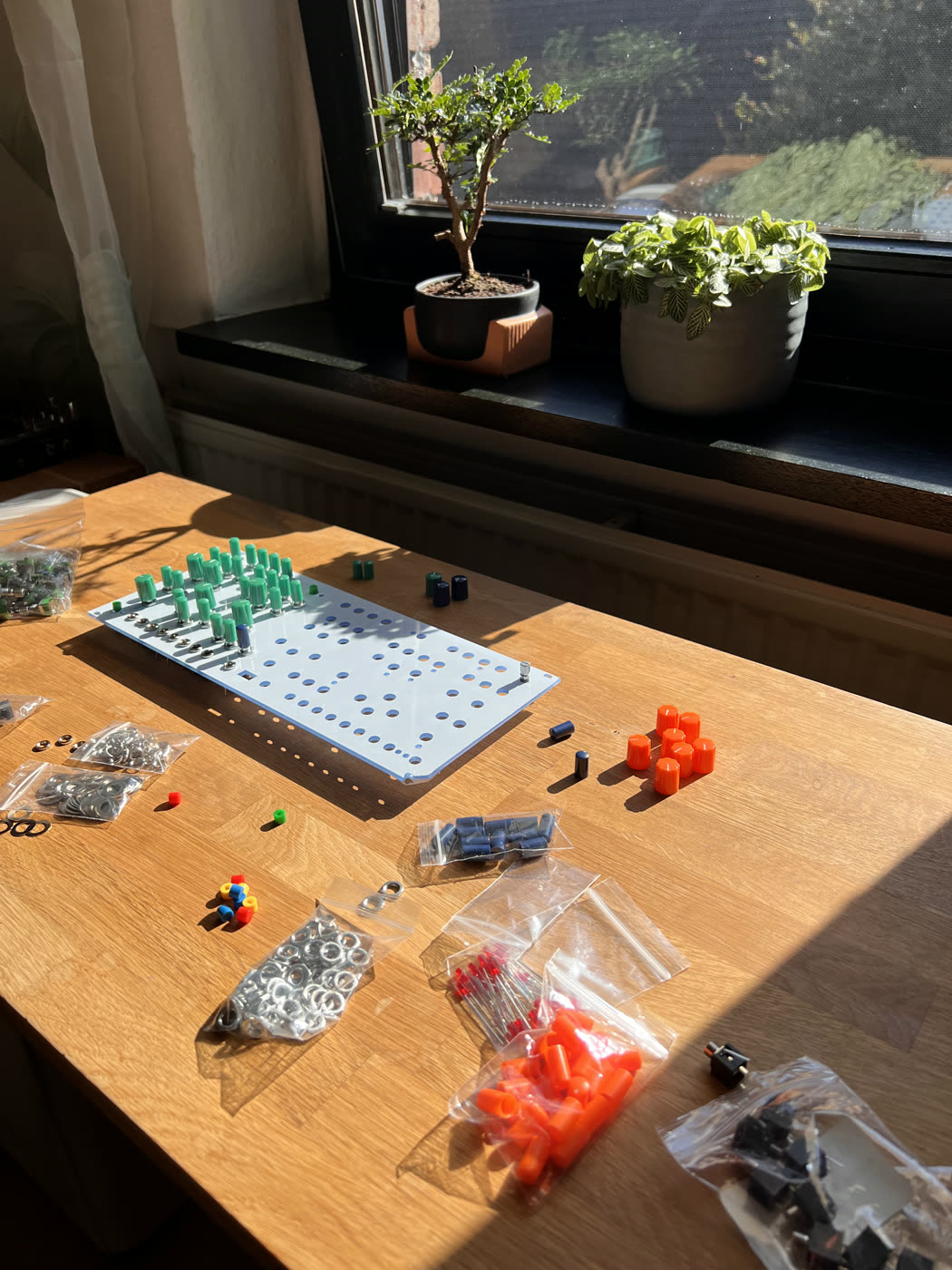
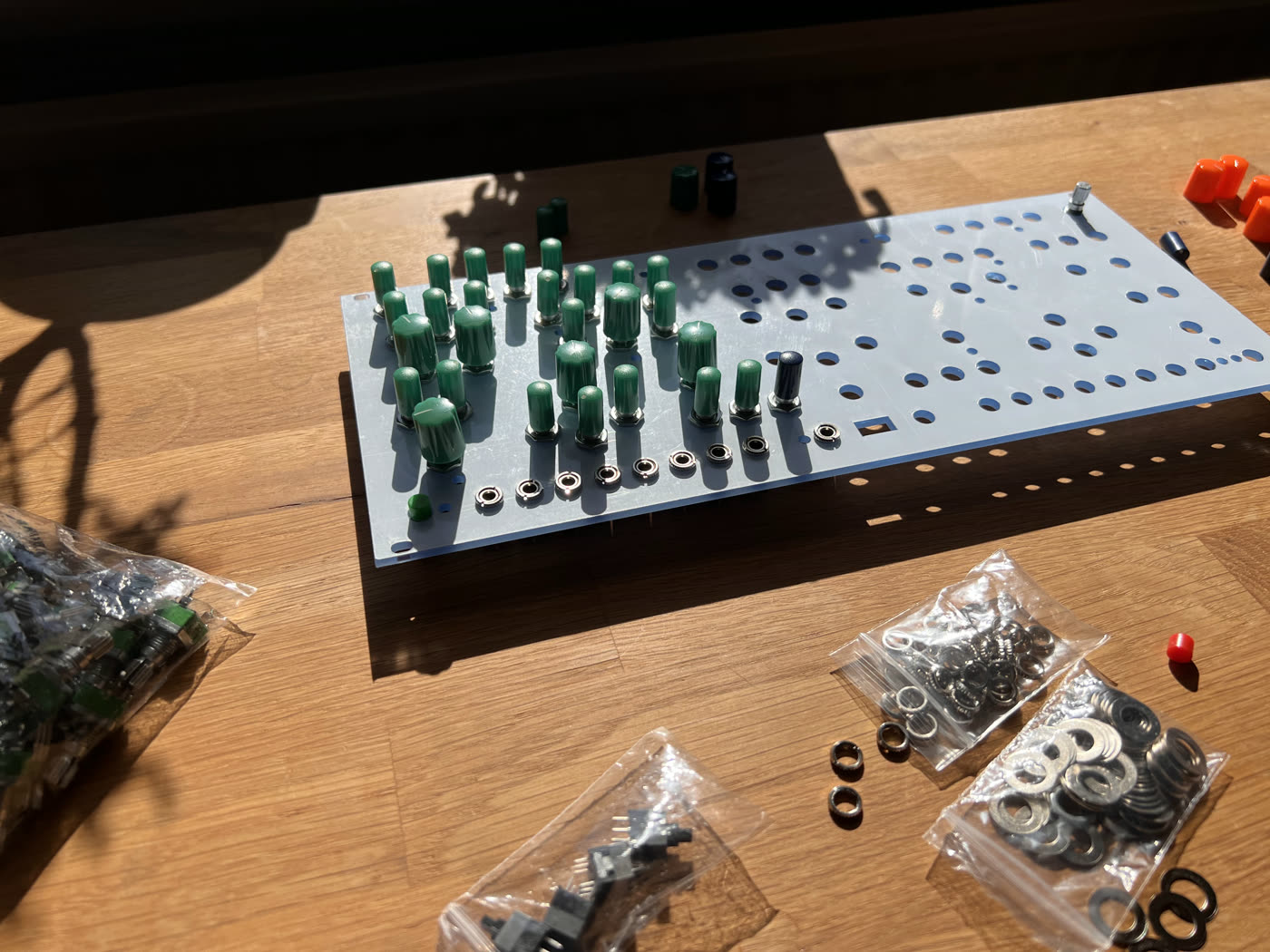
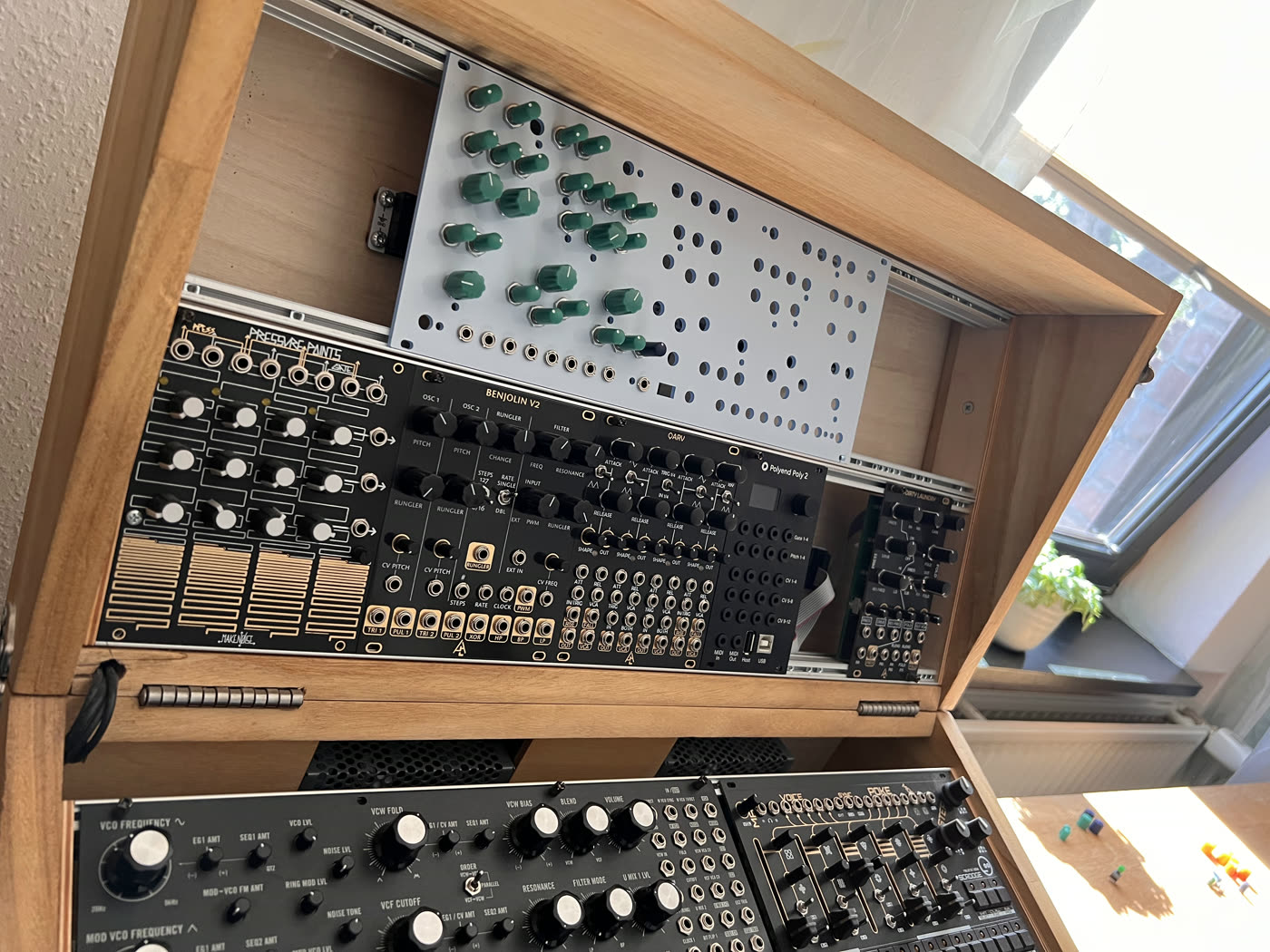
Where two rows of pots sit close under each other, there is no room for fingers. The knobs turn, but only by pinching them from above and squeezing between the neighbours. That is fiddly, and an instrument you play cannot be fiddly.
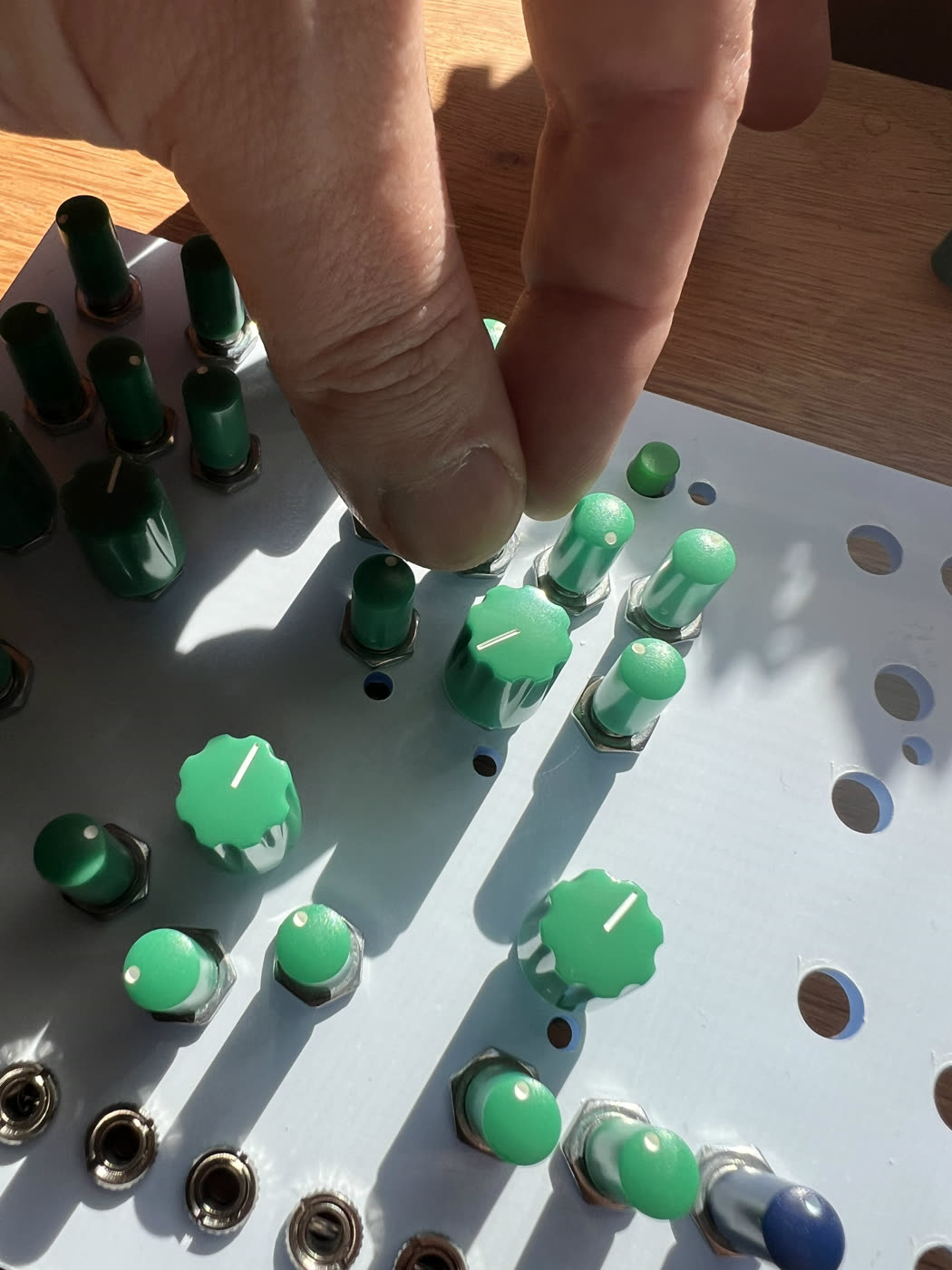
So: a new layout, and since every pot on the board sits under a hole in the plate, a new board too. Placement, routing, order package, nearly everything this chapter just finished. The scripts can place and route it again, but it still feels like starting over, and my motivation is not great today.
The one good thing is the order I did it in. The plate cost 28 € and was bought to find exactly this before the real panel and five boards were ordered. It found it.
9 Oct 2026
Nine millimetres of elbow room
Two days ago the plate said no. It now gets a second chance, and so do my fingers.
Every control stands on a fixed raster now. The tightest gap between two knob caps went from 5.3 mm to 9.7 mm, which is the difference between pinching and turning. 73 knob positions, three of them a hole with nothing behind it yet, kept for later, and 15 lamps instead of 19.
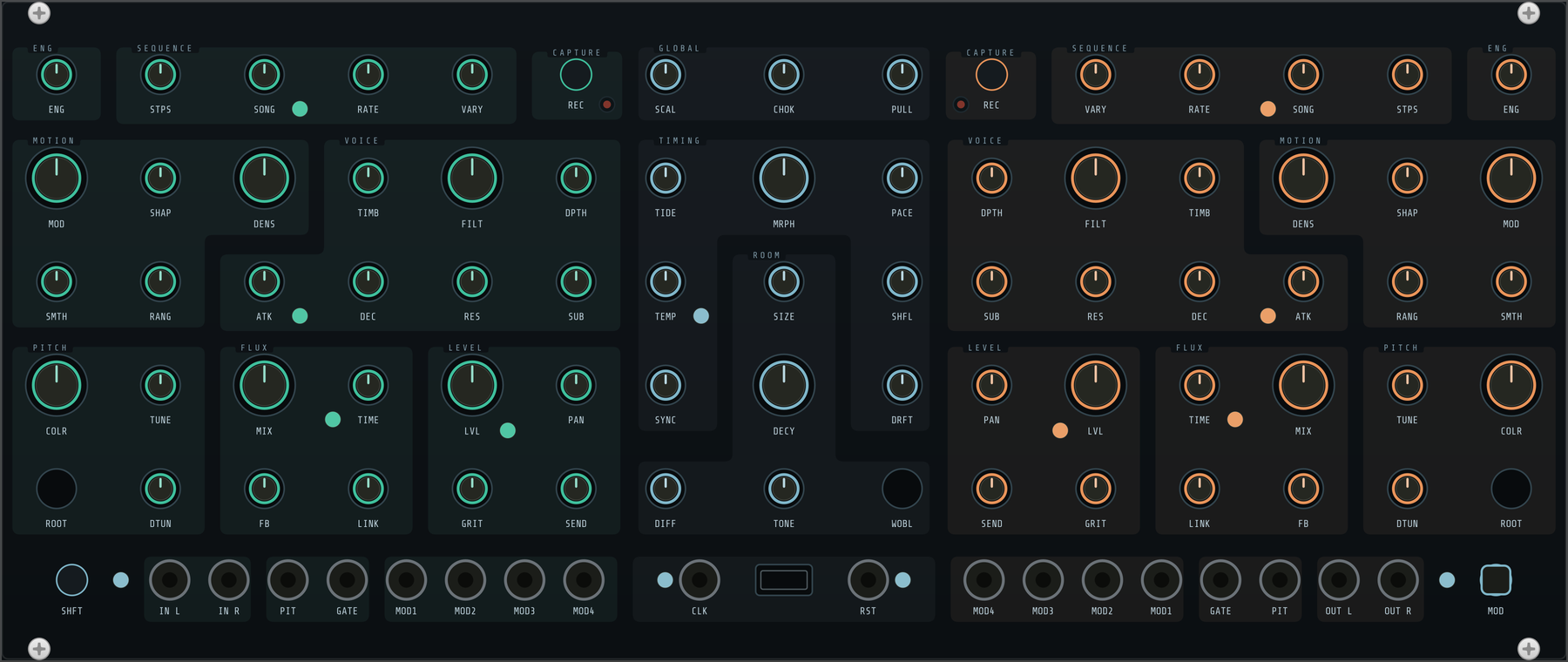
The board followed within a day. Nobody drew the first one, so nobody had to redraw this one: the scripts placed it again and the router laid it again. The second plate is ordered, 24.77 €, in 2 mm instead of 3 because clear 3 mm was sold out. 2 mm is what the aluminium panel will be anyway, so the knobs sit at their real height this time.
And I am writing software again, which beats staring at acrylic. The knob logic moves out of the Rack plugin into code that the plugin and the firmware both run. A knob in Rack and the same knob on the board will do the same thing, because they are the same lines.
13 Oct 2026
Room for a whole hand
The second plate is here. Clear, 2 mm, and this time the knobs went on and my fingers came out unbruised.
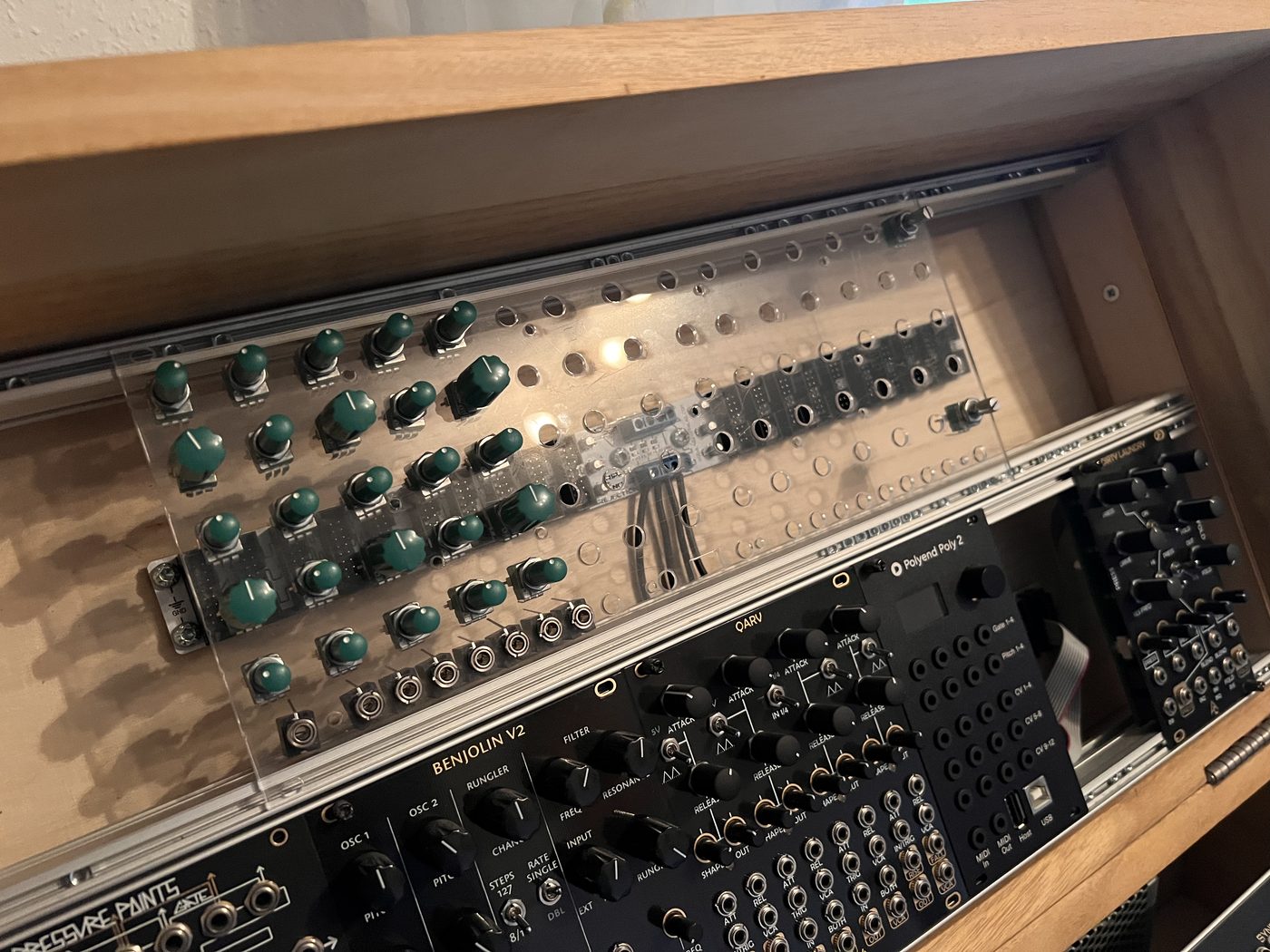
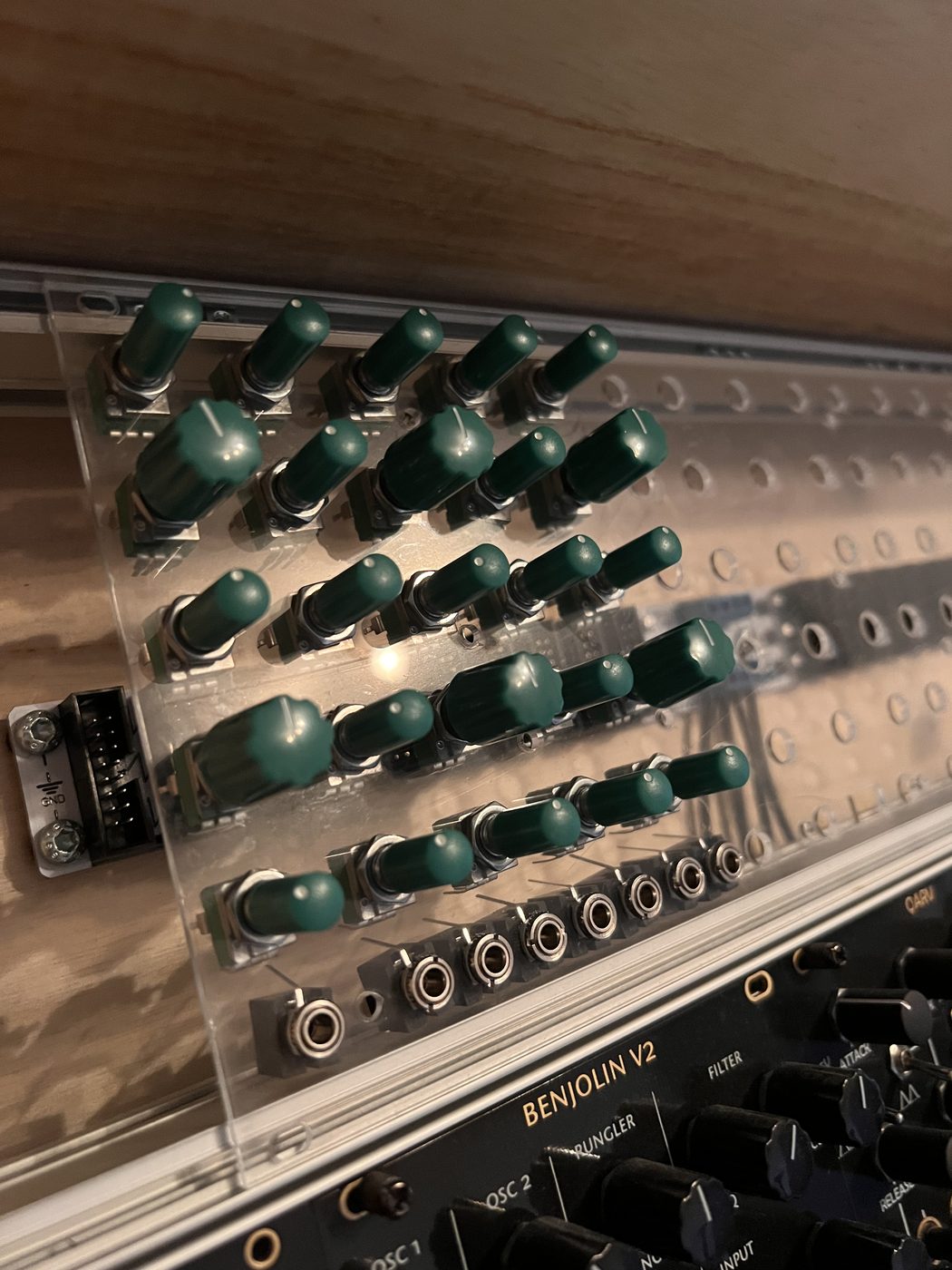
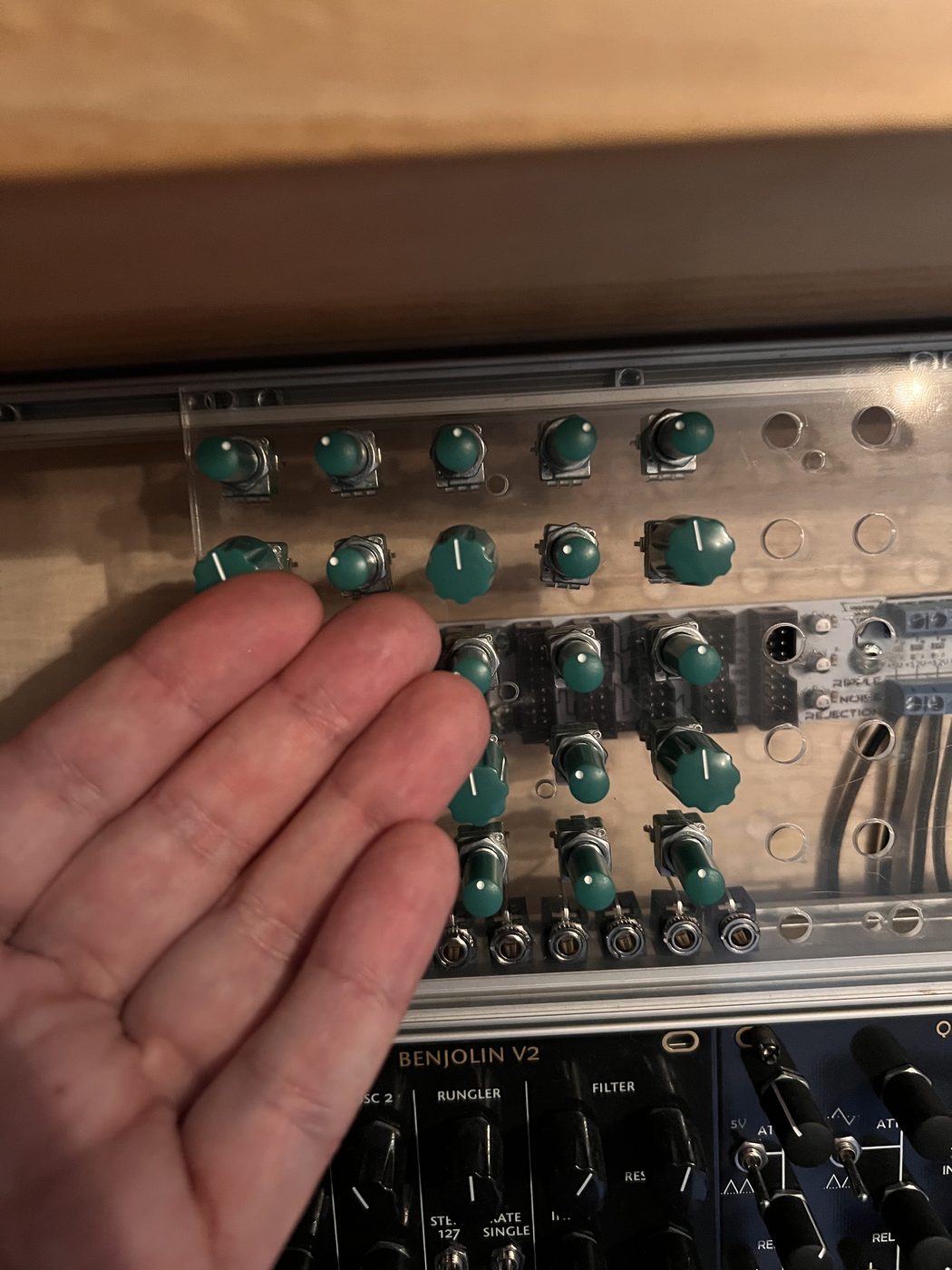
The test is the same boring one as last week: reach in, turn one knob, leave its neighbours alone. It passes everywhere. A flat hand now fits between two rows, which a week ago would have been a magic trick.
The parts held up too. Since the Thonk order went out I have squeezed three more pots onto the board, the kind of thing you do when nobody is counting. The bag was packed for fewer, and it still has enough. I counted twice.
The boards are ordered too, 128.22 € with DHL Express. That leaves one part missing: the SD card slot, which has been sold out everywhere I look for weeks. Seventy-odd pots, no problem. One tiny metal slot, nowhere to be found.
13 Oct 2026
The real panel is ordered
The aluminium plate is ordered, two months ahead of plan: 2 mm, black anodised, UV-printed, from Schaeffer. About 140 € with shipping, here around 23 Oct.
On screen the fields are washes only a few shades off the plate. In ink they would vanish, so the print runs them three times stronger, picked from five previews, and covers the whole plate instead of leaving bare anodise between the fields.
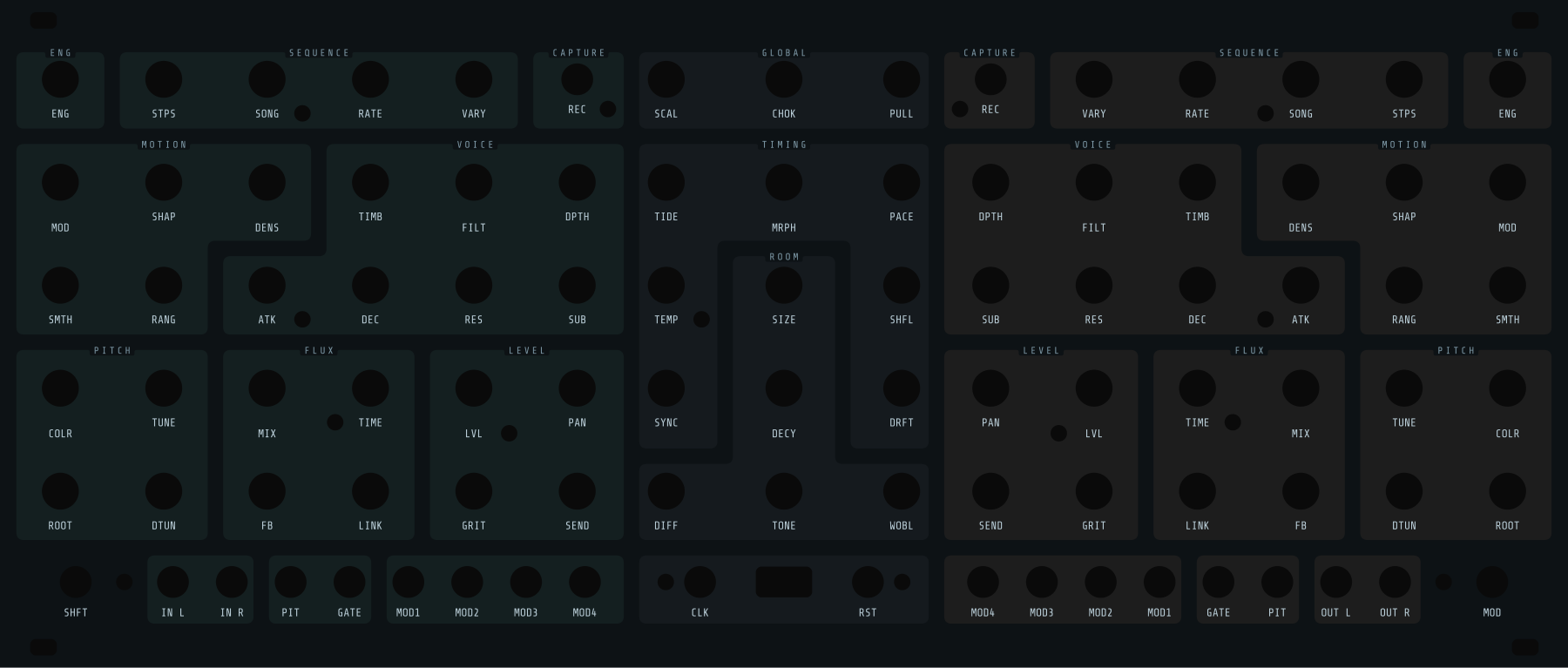
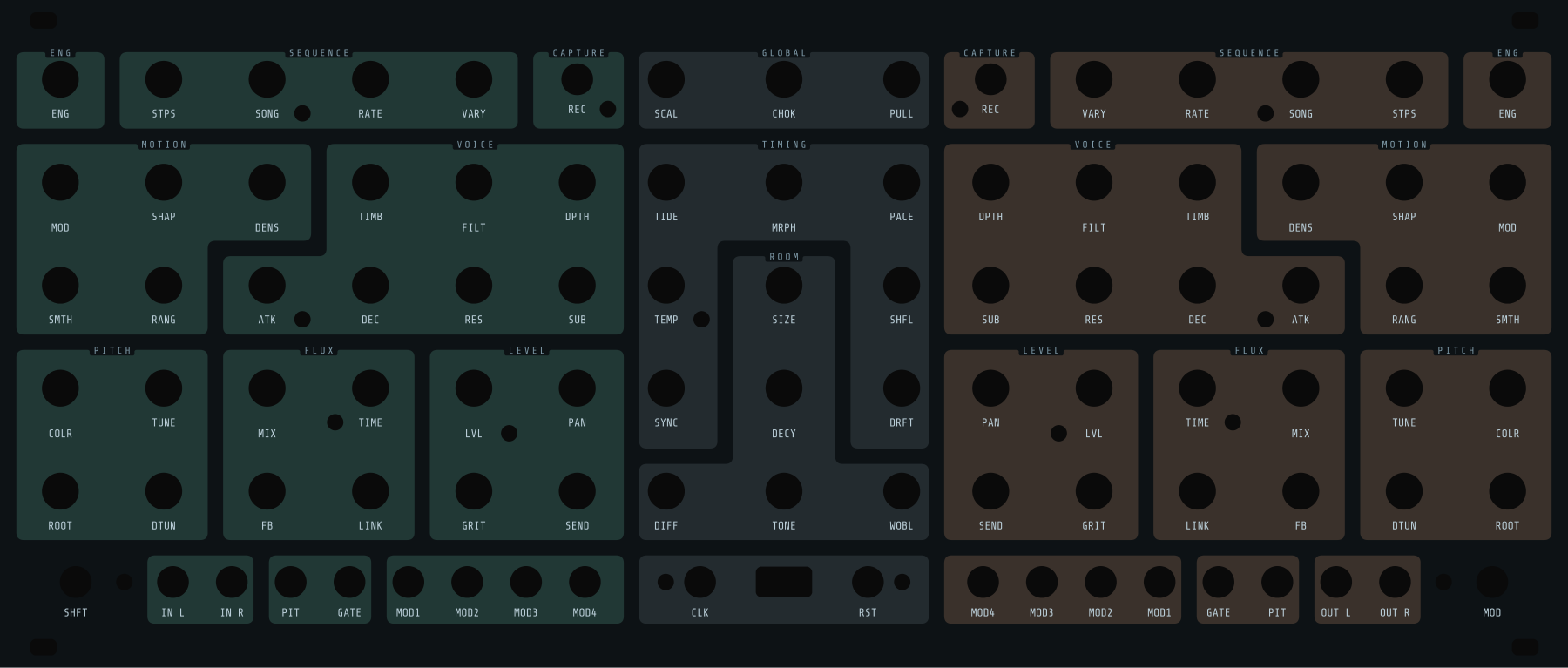
Whether three is right, the plate will say. That is what the acrylic was for too.
And since this is probably the last big order, what the hardware has cost so far:
- Daisy Patch Submodule: about 40 €
- the coupon, boards, parts and pots: about 55 €
- Thonk panel parts: about 205–215 €
- two acrylic plates: 53 €
- five Rev A boards, assembled: 128 €
- the aluminium plate: about 140 €
About 620–630 €. The import VAT and FedEx fee for the Thonk parcel have not been charged yet, maybe 40–55 € more. Not counted: the Daisy Seed, the programmer, tools. If the boards come up as they should, that is it.
21 Oct 2026
Nerd? We prefer the term intellectual badass
The aluminium plate came today, two days early. Black, 2 mm, printed, and it sits in the case where the acrylic used to.
Schaeffer packed two extras. A sticker of a cat that is DEAD & ALIVE, and a bag of gummy bears that says "Nerd? We prefer the term intellectual badass." Fair. The bears were dead and alive too, for as long as the bag stayed shut. Then I looked. They saved the day, and they did not survive it.
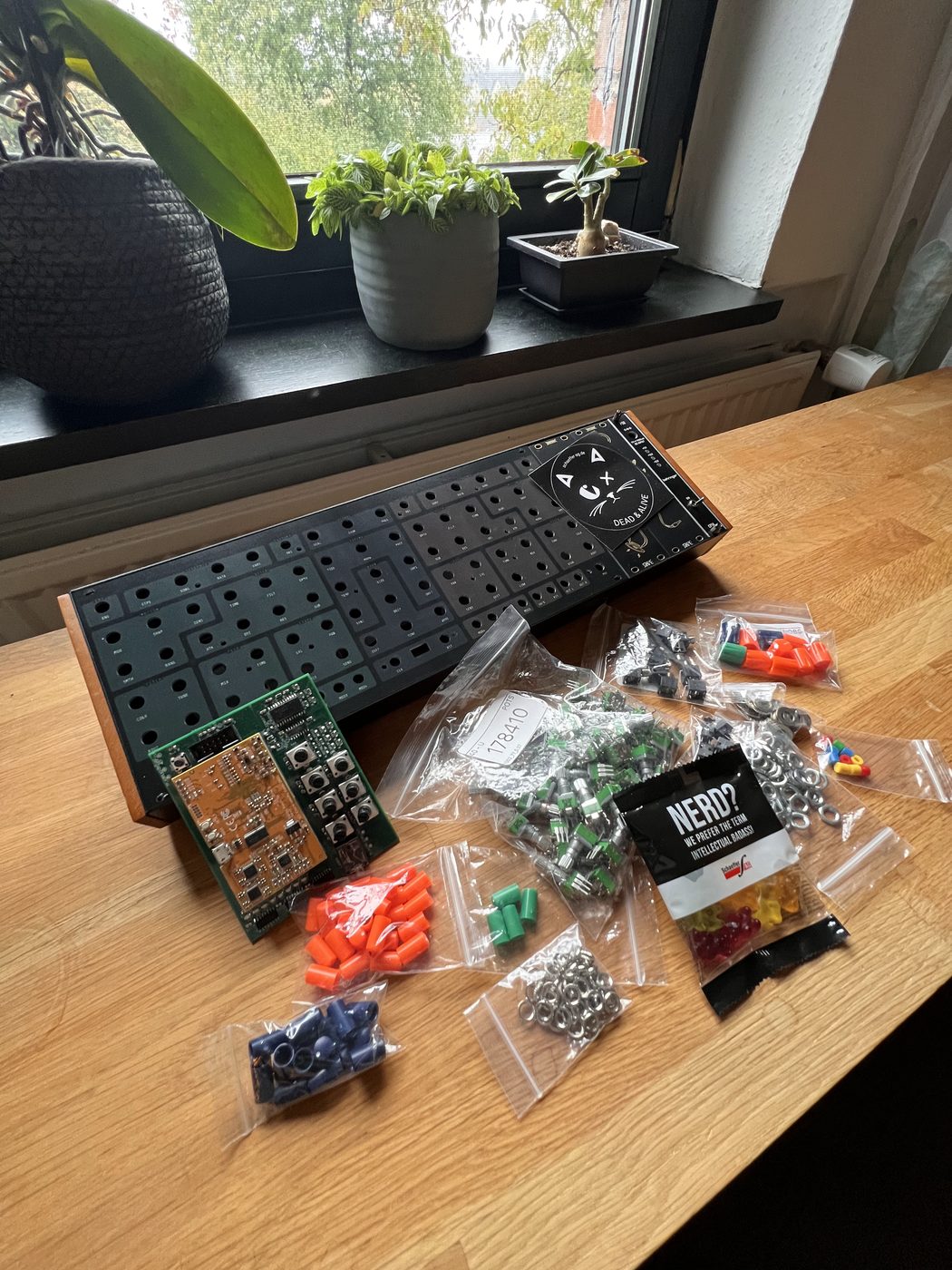
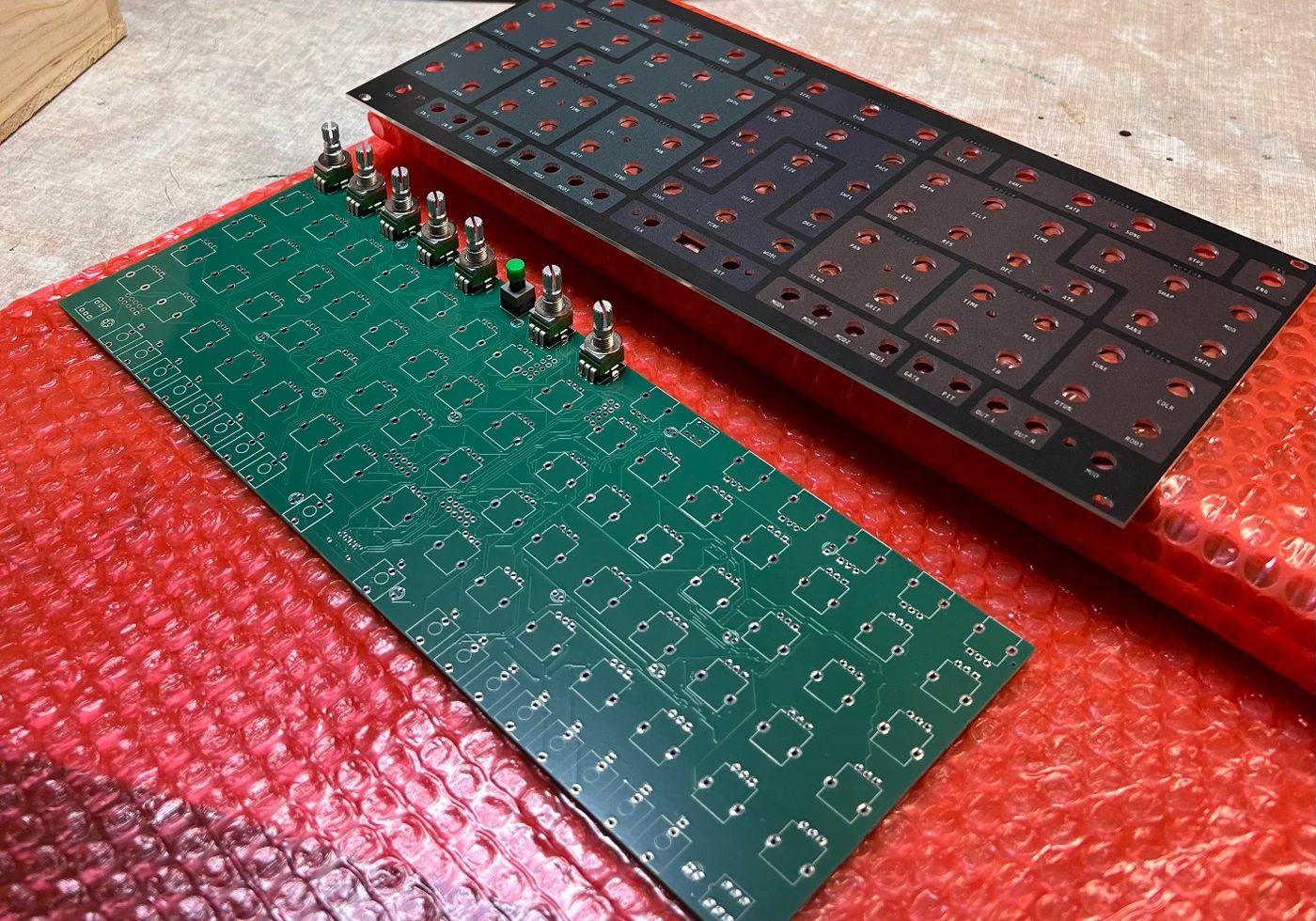
And then the boards came too, three days early. JLC did the small parts on the back; the seventy pots, the jacks and the keys are mine. Seven pots and a key sit in their holes unsoldered, a dry fit: do they need the washers, and does everything come up to the same height under the plate?
The weekend starts now.