Workshop Journal · Chapter 18
It runs · CPU hunt, part III
523 joints by hand, Rev A boots with its keys the wrong way round, and every knob at noon sends the CPU hunt back to work
24 Oct 2026
523 joints
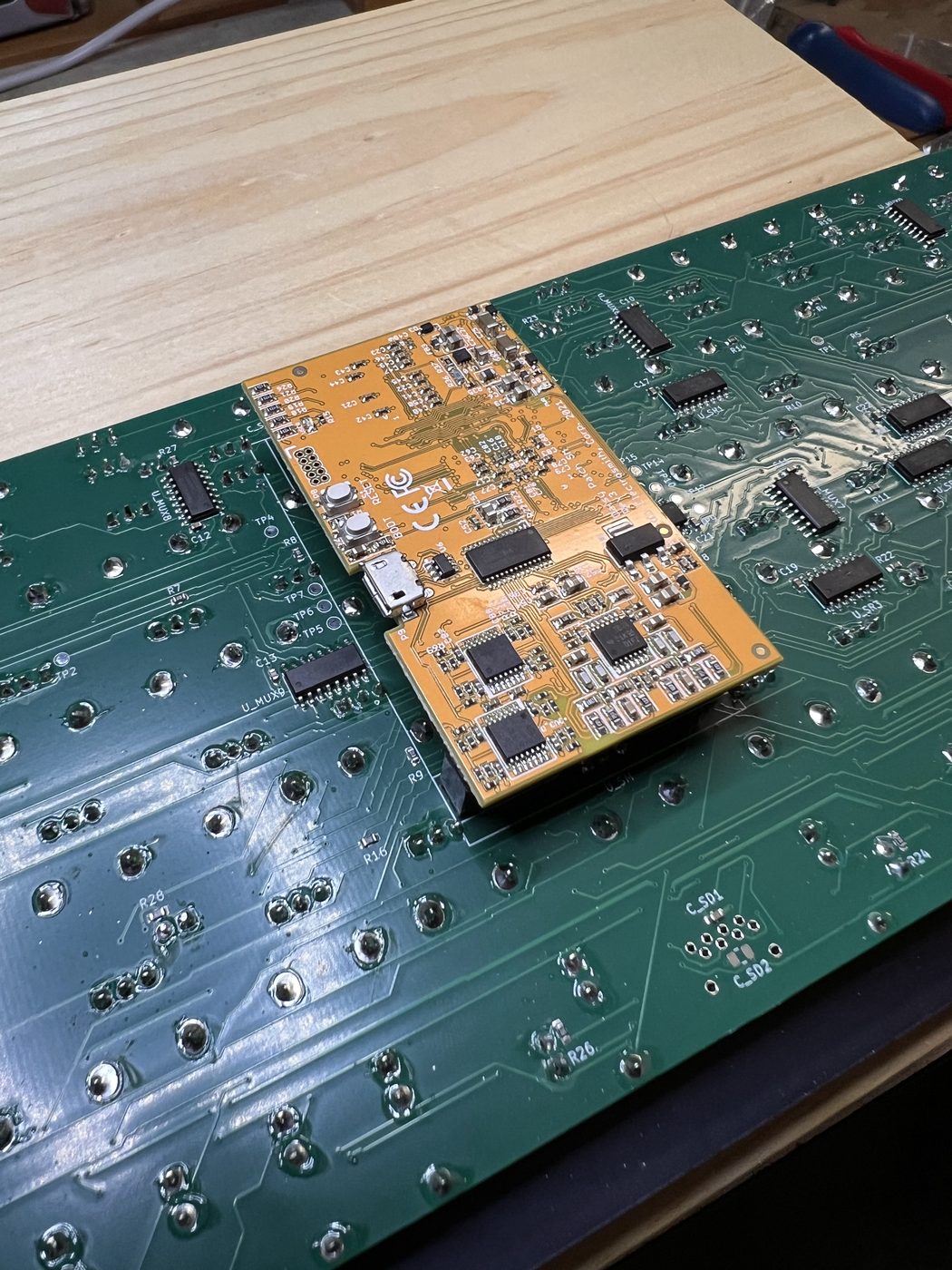
Saturday was soldering. JLC did the small parts on the back; everything you touch was mine: 73 pots, 18 jacks, 15 LEDs, four keys, the sockets for the Patch Submodule and the power header. I counted the joints afterwards, from the board file rather than the board: 523.
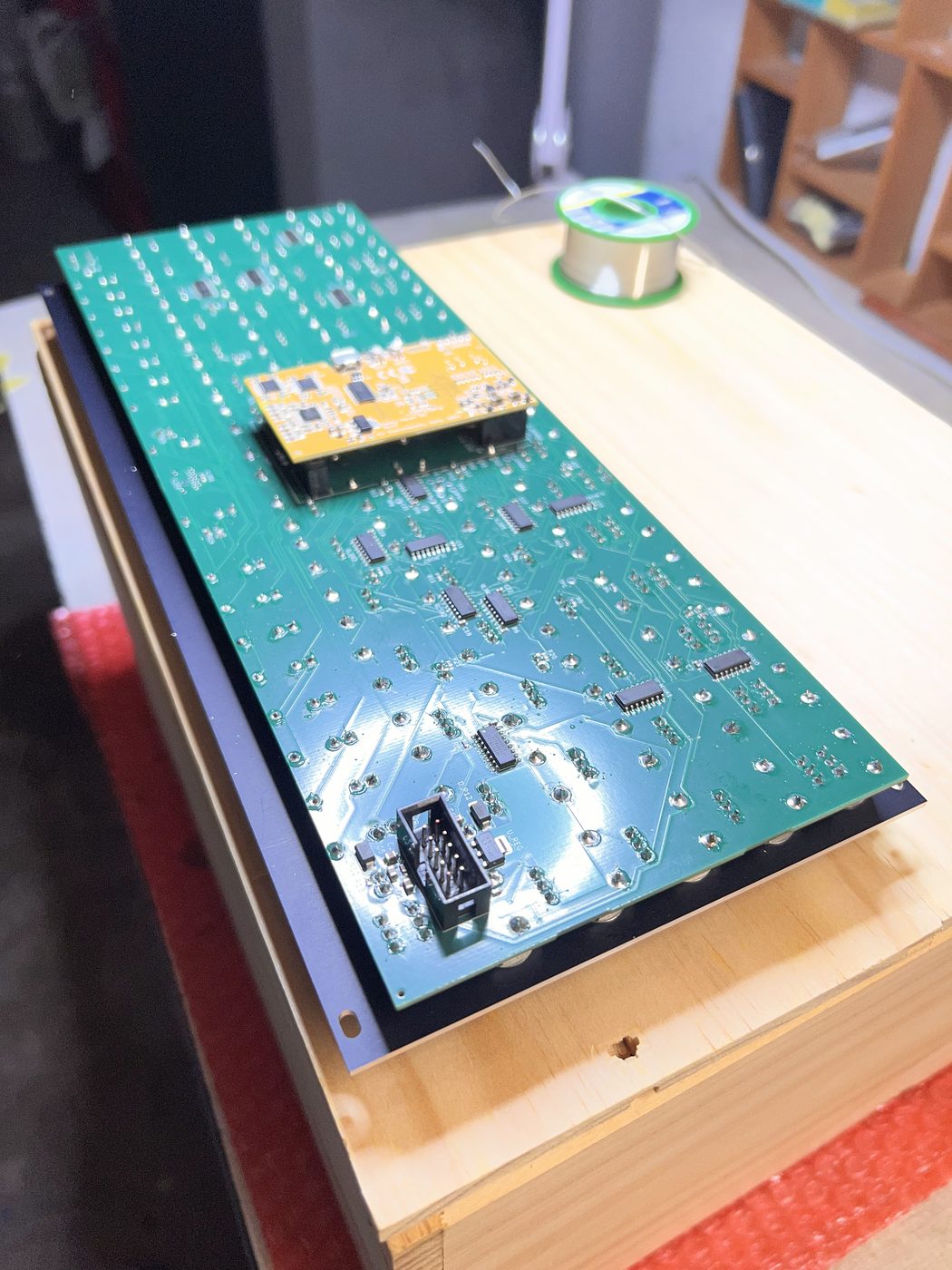
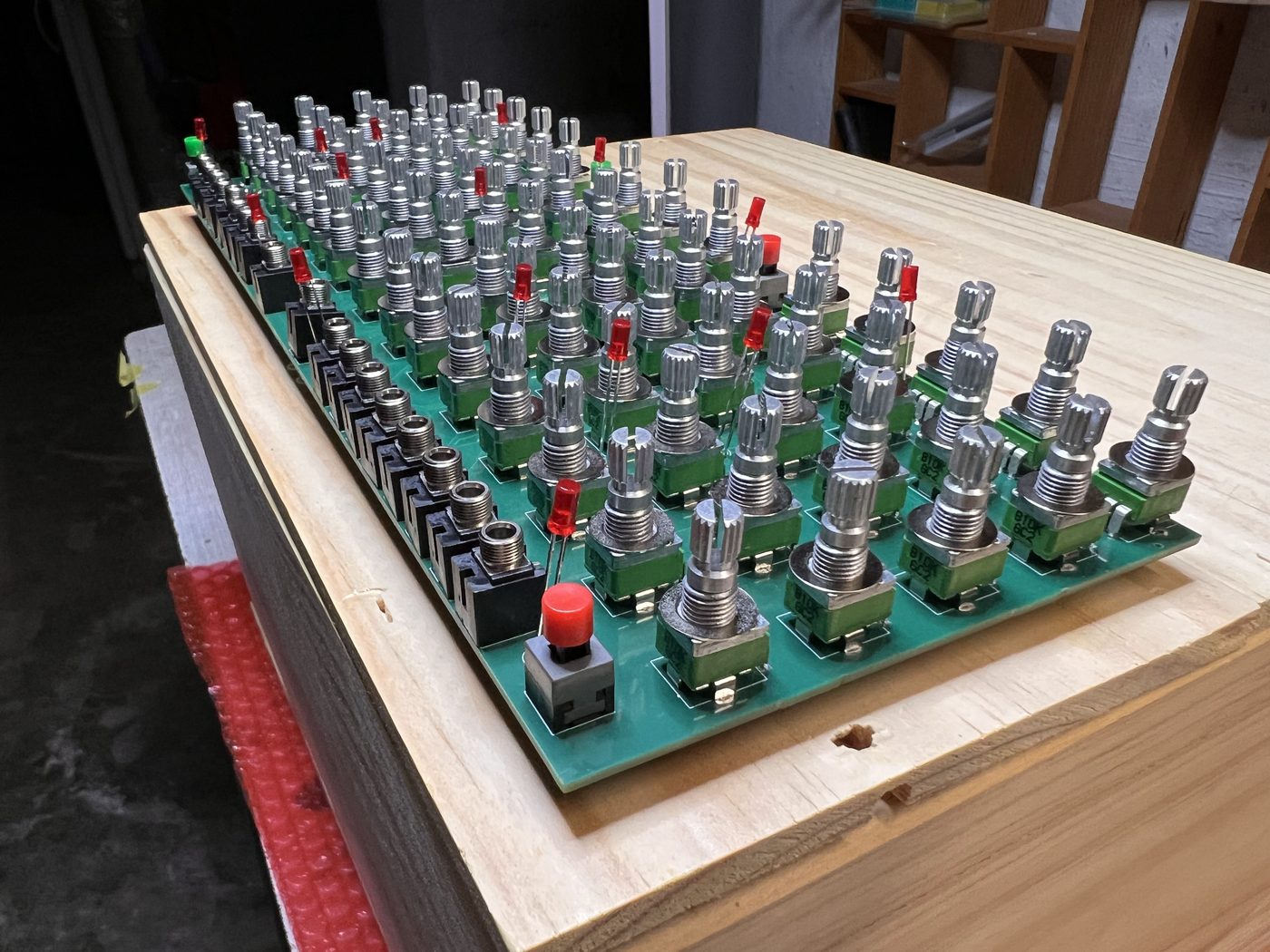
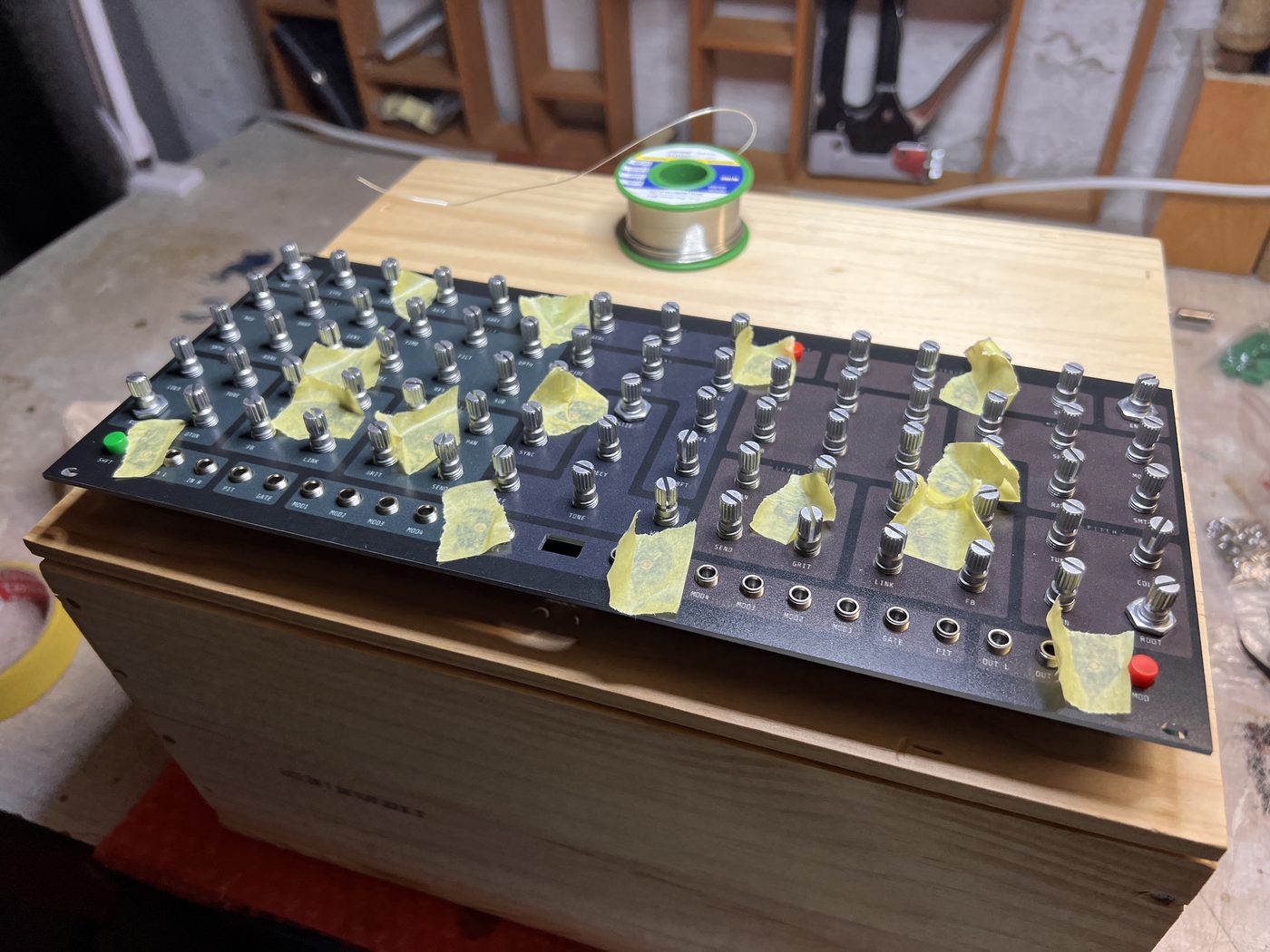
Rev A is done except the SD card slot. It is still sold out everywhere, but three are on their way as free samples and get soldered in next week. The board runs without one anyway.
First boot: the firmware flashed, all 73 pots read, every lamp lights. The four keys read pressed with nobody touching them. I had soldered them in the wrong way round, so they are closed at rest and open when pressed. Desoldering four keys from a finished board is no fun, so the firmware got a switch that reads them the other way round.
Then a click: switching a deck to the bucket brigade made one audio block take seven times its budget, because it cleared two 1 MB tape lines in one go. Now the lines only forget what was written, and ten minutes hands off brought no click.
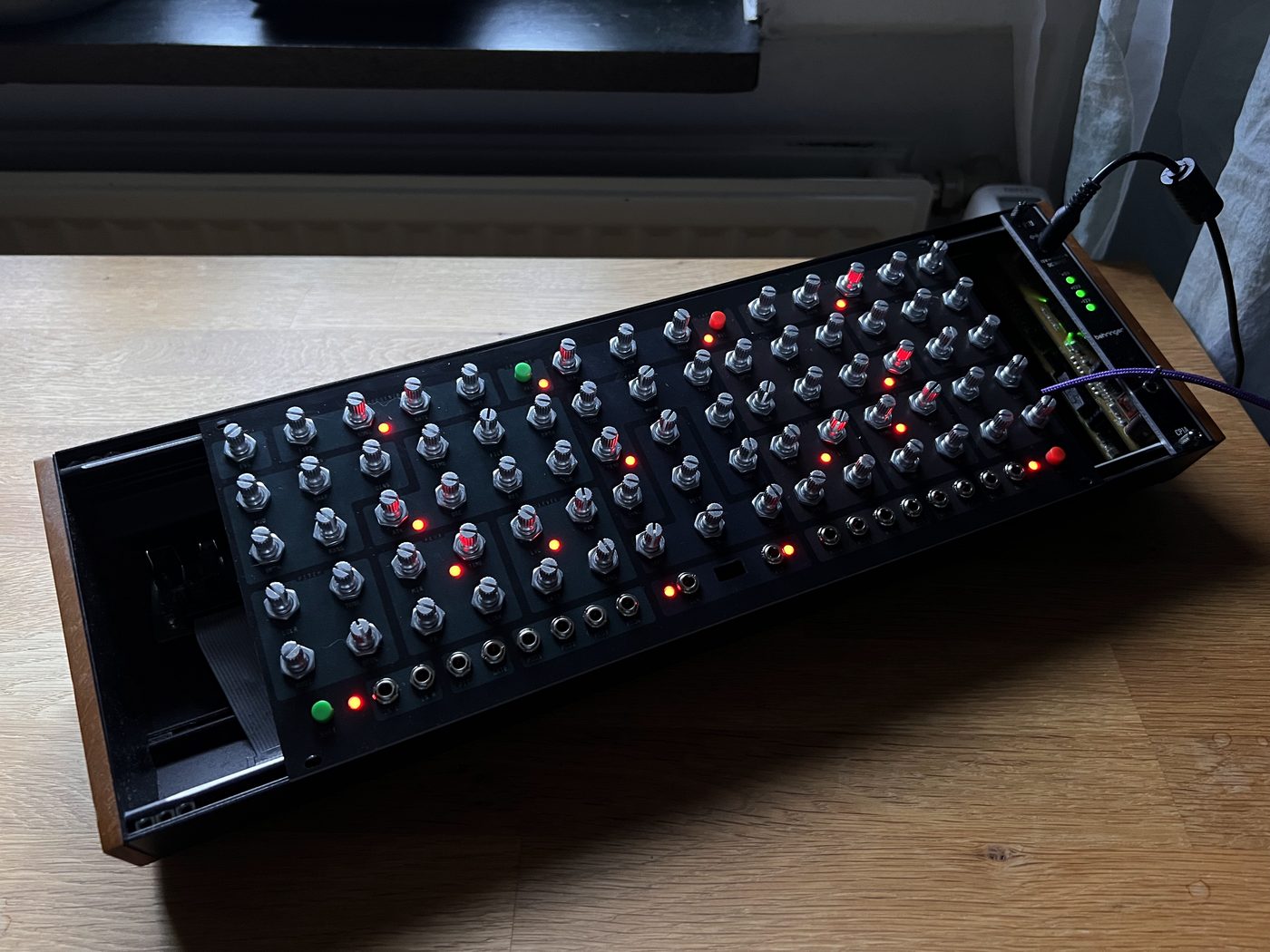
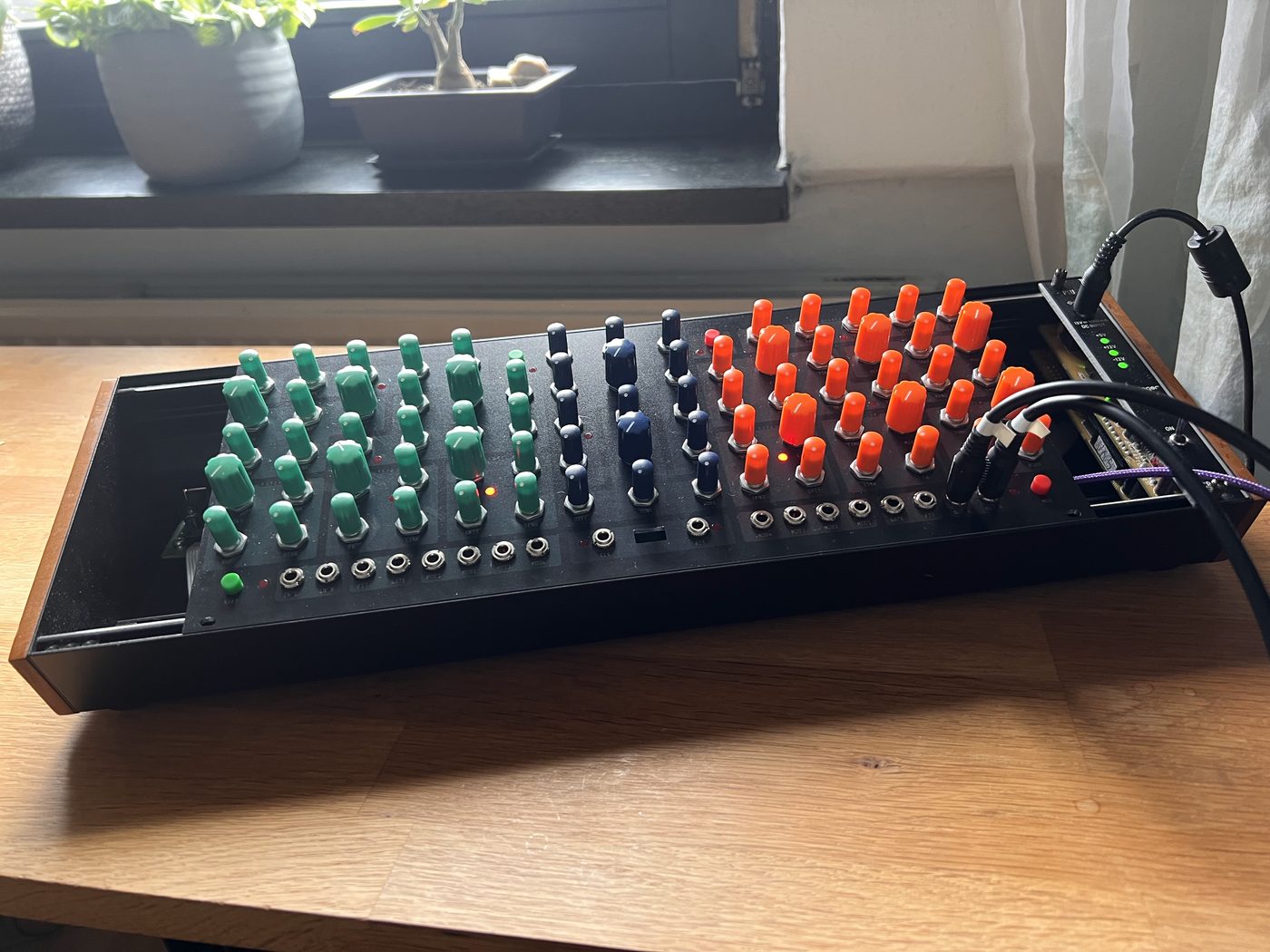
And the Thonk parcel's bill finally came: 81.75 € duty and import VAT. The hardware ends at about 700 €.
25 Oct 2026
Noon
On the first boot every pot sat at its left stop. Turn them all to noon and the patch wakes up, and so does the old problem: the audio callback has 945 000 cycles per block, and at noon it took up to 1 030 000. It crackled.
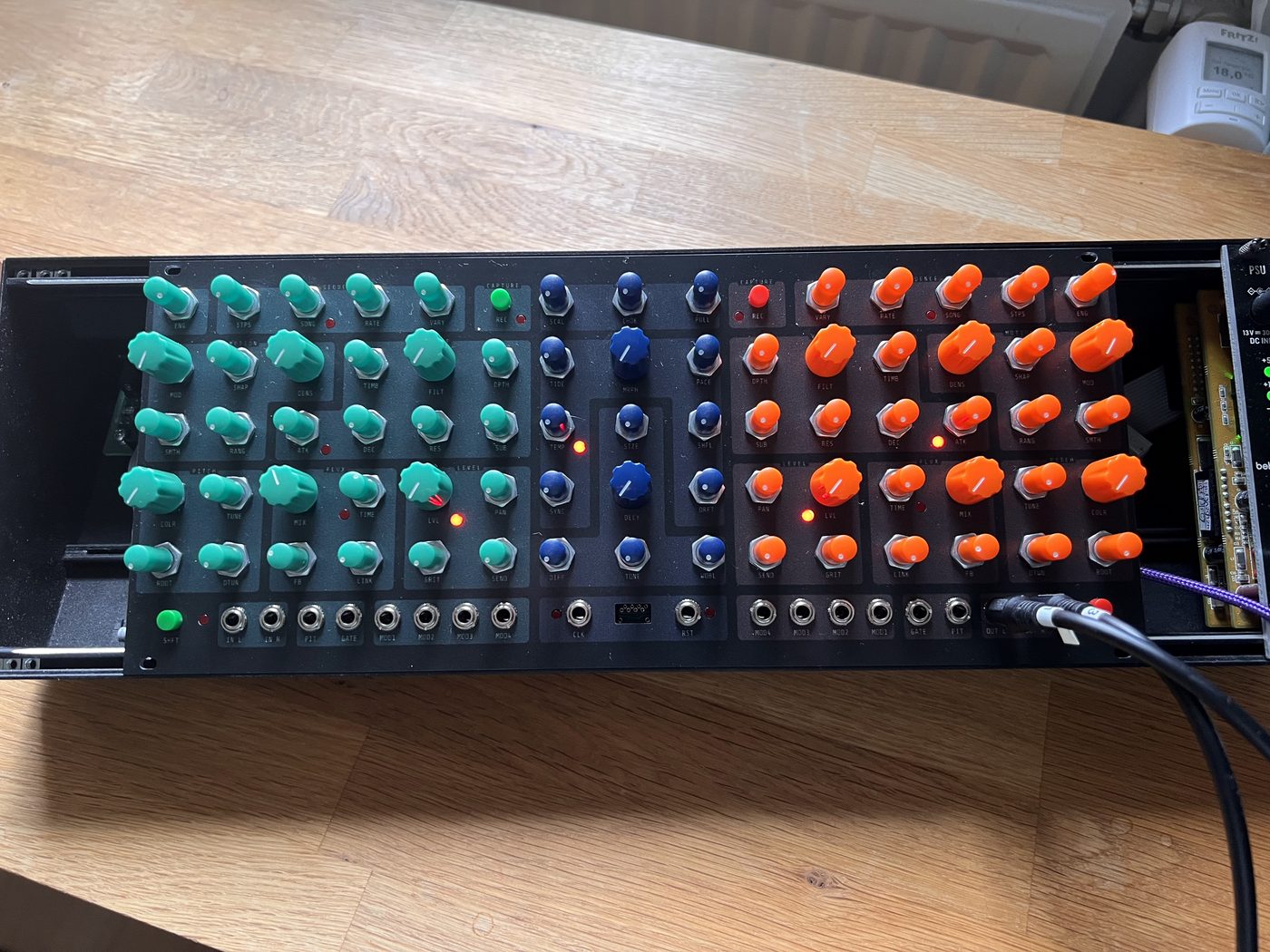
Yesterday evening and today went into finding where. TIDE searched its whole step grid every time it moved a lane; now it checks the step it is on first, and its worst block fell by almost half. The wavetable voices paid double for their mip crossfade while struck; a cheaper crossfade gives the same bits.
The noon patch now peaks at 875 374, under the 900 000 I want as margin. Two releases, 2.23.2 and 2.23.3, CPU work only. Nothing sounds different, which is the point.
27 Oct 2026
Seven quiet ones
RANGE on a note deck used to push the melody up its span, so at half-way a tune parked near the top and fell onto the root. Now RANGE is a width around a fixed centre: turn it down and the melody gets narrower, not higher.
Then a hunt for bugs you only hear once you know them. Seven. The best one: BODY applied velocity twice, so a soft accent of 0.3 landed at 0.09, more mouse than drum. 2.23.5 fixes all seven, and TUNE fully left now goes an octave lower, down to 55 Hz.
28 Oct 2026
Where you left it
Until today every power cut was a factory reset. Now the board remembers. The knobs speak for themselves at boot; the flash keeps what they can't show, like the 50 depths under MOD. It saves once the knobs have been still for 15 seconds, at most every five minutes.
The first try played the old filter for 30 ms after boot, so the output now stays mute until the knobs are read, then fades in. And one group of pots jitters by up to 57 counts on its own, which the board took for a hand still turning, so it never got to save. Those pots got a wider dead band.
Also new: SHIFT + MOD wipes the MOD layer, and its lamp blinks five times to say so. The ENG knob now runs the note engines first, then BBD, then Sampler.
The first five minutes recorded off the hardware rather than out of Rack, straight from the line out: